
Gender Situation (more on Australian story)
Introduction
Percentage of women at each management level in the Australian workforce:
- Chief Executives (22%)
- Heads of Business (30%)
- Key Management Personnel (37%)
- Other Executives and General Managers (36%)
- Senior Managers (39%)
- Other Managers (39%)
- Australian Workforce (51%)
(source: WGEA’s Employer Centre Census 2023-24 as quoted by Kate Hadwen, 2024)
However, the pay disparity between males and females is around 20% in businesses and closer to 50% for the biggest Wall Street Banks (source: Sally Patten, 2024a).
In Australia
“...The analysis of the gender pay gap using data from the entire workforce aged 25 to 60 has found that just 20% of the difference can be ascribed to occupational choice - women opting for lower paid jobs to men - while 80% is explained by variations within the same occupation. The large majority of the gender pay gap in hourly wages is driven by gender differences within occupations…”
Elyse Dwyer & Silvia Griselda (e61 Institute) as quoted by Julie Hare, 2024
The graph below shows the gender pay gap by occupation.
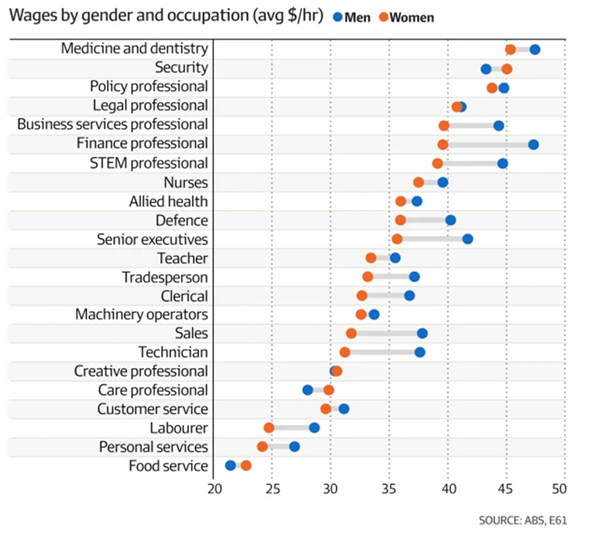
(source: Julie Hare, 2024)
The most significant factors to explain the gender pay differences involve marriage and parental responsibilities; occupational choice, part-time status, academic qualifications, switching jobs, etc play a much less significant role.
One of the barriers to entry has been the lack of workplace flexibility. This is being changed by offering generous parental leave and providing extra flexibility after a parent returns to work, ie opportunity to work from home. Furthermore technology, like Zoom, is allowing for more flexibility. Importantly, there is a need for the appropriate family and professional support.
Language is important In the gender challenge. For example, the word chairman needs to be changed to chair.