
Expanding the Curiosity Curve
An expanded curiosity curve is explained in the diagram below:
- the left half represents 3 zones of certainty (self-righteous disdain, confident dismissal and sceptical tolerance)
- the right half shows 3 zones of curiosity (cautious openness, genuine interest and fascinated wonder).
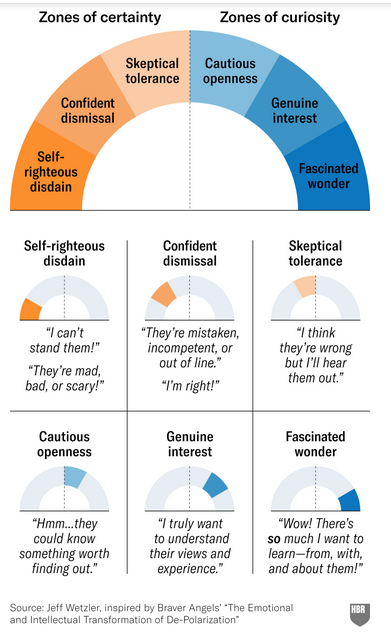
(source: Jeff Wetzler, 2025)
Steps in the curiosity curve
- Where in the curiosity curve is your current mindset located?
You need to be aware of what happens when you encounter disagreement, ie which of the 6 zones reflect your attitude.
While the zones of certainty provide psychological comfort and apparent confidence, it will undermine conversation effectiveness.
You need to understand metacognition, ie
"...Becoming aware of your own patterns of thinking. Having this is self-awareness sets the stage for mindset shift..."
Jeff Wetzler, 2025
- Set your curiosity intention
Identify where your mindset should be, ie within which of the 6 zones
"...Regardless of your starting point, pick a mindset shift that is ambitious but feasible and set your intention to anchor there..."
Jeff Wetzler, 2025
- Ask questions to help shift your mindset, ie by using curiosity sparks:
i) What might the other person be struggling with that you are unaware of?
ii) What reasonable (but unspoken) concerns, reasons, or information, etc might underlie their disagreement with you?
iii) How might your words or actions be impacting them in ways you don't intend?
iv) What incorrect assumptions might you be making about the situation, issue or other person?
v) Even if your assumptions are correct, what else might be going on that you are not aware of?
vi) What unspoken insights or ideas might the other person have that could address your challenge?
NB Sometimes using a colleague or an AI bot can help answering these questions