
Common Change Management Errors (7 cont. b)
Not Understanding How The Brain Works
With technology changing so quickly, our brain has not kept up with these changes.
To survive, the brain has developed survival tactics as it suffers from information overload, ie cognitive overload.
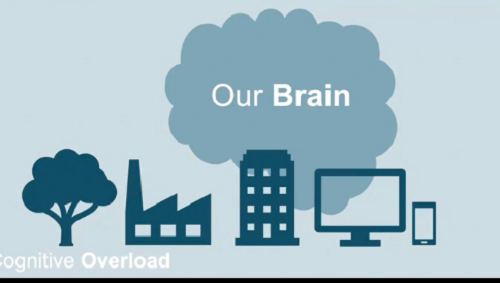
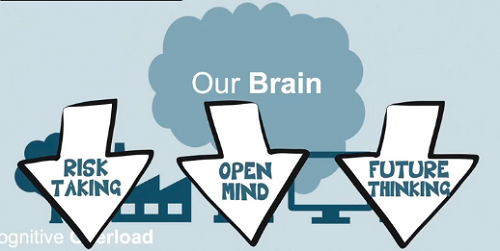
This means the brain struggles and feels threatened. As a result, there is the amygdala hijack, ie a defensive wall appears, as the brain sees new things as a potential threat. In response, hormones, like adrenaline and cortisol, are produced to get muscles ready for action, ie fight or flight, to handle the threat. Thus the brain feels out of control and responds in 3 ways ie
i) reduced risk-taking
ii) becomes more close minded
iii) reduced ability to plan and think for the future
(source: Edwina Pike, 2022)
NB The amygdala high-jack can happen very quickly. However, it takes a long time to through the dissipate.
Most organisations state that they
"...value openness, honesty, integrity, respect and caring, yet act in ways that undercut these values - not just once in a while, or on very rare occasions, but regularly and routinely - whenever we face threatening or otherwise difficult situations..."
Chris Argyris as quoted by Bob Dick, 2023
There is the amygdala hijack, ie when we are under threat or facing embarrassment, the amygdala part of the brain takes over and, if necessary, over-rides the rest of the brain, especially the prefrontal cortex (the thinking part of the brain).
(for more detail, see elsewhere in the Knowledge Base)
Yet during change it requires
- more risk-taking (eg try something new, etc)
- more open-mindedness (eg consider alternative ways of doing things, adopting different practices, trying something different, etc)
- ability to think about the future (eg focusing on the potential of the future rather than what is happening at the moment, ie 'here and now'.)
NB The amygdala high-jack can happen very quickly. However, it takes a long time to dissipate.
There is an art in staying below the amygdala-hijack threshold.
There is also 'fast' and 'slow" thinking (for more detail, see other parts of the Knowledge Base).