
Common Change Management Error (3 cont. k)
Toxic Boss
Introduction
The behaviours of organisational leaders shape an organisations culture. Culture is a continuum, ie from 'healthy and constructive' to 'unhealthy and destructive', ie 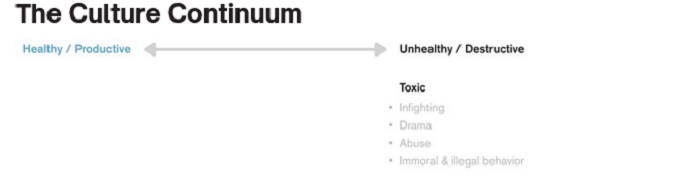
(source: LeadFactor, 2023)
A toxic culture is at the unhealthy/destructive end, it is a
"...hostile environment where abusive patterns of interaction inflict mental, emotional, psychological harm. A toxic culture is characterised by infighting, drama, abuse, and often illegal behaviour. In addition to devastating psychic damage a toxic culture can cause to employees, it can also threaten the viability of an organisation through lost productivity and poor performance. Most toxic behaviour is subtle. Subtlety is safer than overt toxicity because it provides deniability. For example, there are mild ways to bully, harass, discriminate, publicly shame...... it's the brazen acts that get people into trouble. A menu of subtle behaviours might include ignoring a question, neglecting a visible need, failing to provide feedback deliberately to maintain ambiguity, withholding time and attention, excluding someone from a meeting or a conversation, polling on the work under the guise of mock appreciation......subtle acts may not be as visible, but they can marginalise, embarrass, and punish just as effectively as a more aggressive acts..."
LeadFactor, 2023
Employees find these violations of human decency painful and debilitating.
Toxic cultures are widespread, ie one survey found around 90% of respondents have worked in a toxic culture (LeadFactor, 2023).
There are 2 types of toxic bosses
i) active (personally engage toxic behaviour; more concerned about their image, ie impression management, than the harm they have caused to others; remorseless; don't take responsibility for their actions; encourage positive perceptions of themselves by controlling flow of the information.
"... A focus on the positive presentation of themselves to counter any negative feedback that may be circulating about them..."
LeadFactor, 2023
They are motivated by unbridled ambition and suspend ethical restraints:
"...they selflessly pursue their personal agenda on the backs of those who report to them..."
LeadFactor, 2023
Many of them are narcissistic and will not acknowledge the harm their behaviour does.
"...they repeatedly justify their harmful behaviour until they permanently disable the human alarm system we call the conscience or moral sense. Once they get to this point, any residual compunction is a mere speed bump..."
LeadFactor, 2023
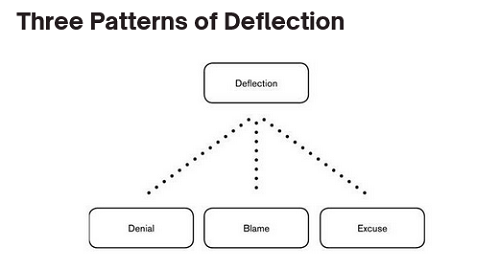
Active toxic bosses tended to display one or a combination of 3 common patterns of deflection (see below diagram), ie
- denial (refuse to acknowledge their own behaviour)
- blame (will use the infractions of others in an attempt to minimise their own failures)
- excuse (often acknowledge their own behaviour as strong or firm and rationalise it as the only way to extract the required performance from others)
"...or they point to high standards, stress and a low margin of error as a licence to rudeness and incivility...... some actively toxic bosses label their predatory behaviour as 'courage', with the claim that they are the only ones who are willing to have the tough conversations that are required to hold others accountable..."
LeadFactor, 2023
(source: LeadFactor, 2023)
The best way to handle an active toxic boss is to replace them.
ii) passively complicit (represent the negligent side of leadership;
"...They allow abuse episodes and tolerate cycles mistreatment through the enabling behaviour of being passive, aloof, or absent. In short, they allow others to engage in toxic behaviour without consequences..."
LeadFactor, 2023
Some of the justifications or rationalisations for toxic behaviour includes
- the fear that they induce in others, through toxic behaviour, increases productivity
- their attitude and actions provides accountability
- they are intimidated by the toxic members of their teams (despite their positional power yield to the influence of bullies and abusers)
- too busy or preoccupied with other things so that a power vacuum is filled by others, ie defactor leaders
"...it's often neglect and lack of communications that devastates employees the most. Those on the receiving end feel the sting of silence and void of validation..."
LeadFactor, 2023
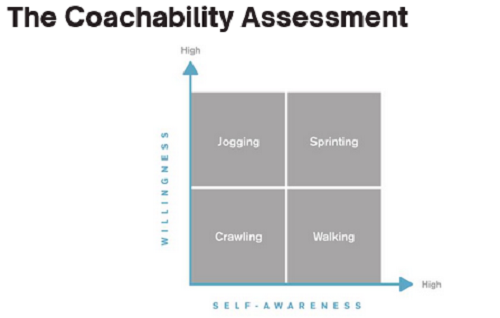
The passively complicit boss is often coachable; this will depend upon self-awareness and willingness (see below diagram).
If both self-awareness and willingness are high, there is a good chance they can change their toxic behaviour.
"...If the individual has high willingness but low self-awareness, a willingness will eventually lead to more self-awareness and the individual will most likely make steady progress. On the other hand, if the boss is self-aware but lacks willingness, the lack of willingness will become a limiting factor and significantly slow the individual's progress. Finally, if the passively complicit boss is low on both accounts...... they have insufficient levels of both self-awareness and willingness to see the liability of their behaviour..."
LeadFactor, 2023
(source: LeadFactor, 2023)