
More On Change Saturation And Fatique
Introduction
With the increasing amount and pace of change, people can suffer from change saturation, ie too much change to handle; people feel they have no control over the pace of change. This can cause change fatigue which ranges from a general lack of resilience to job dissatisfaction to breakdowns to staff leaving the organisation.
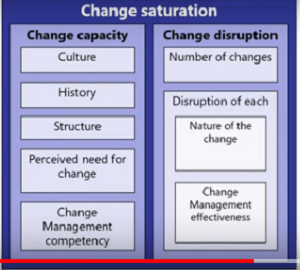
Change saturation has 2 elements, ie capacity and disruption; ideally you increase capacity and decrease disruption
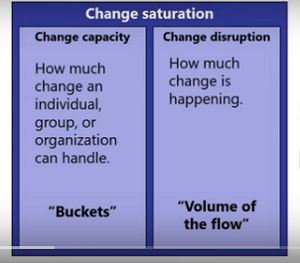
(source: Prosci, 2023)
Elements of change capacity and change disruption
Level of change saturation (showing a high level of change saturation in organisations)
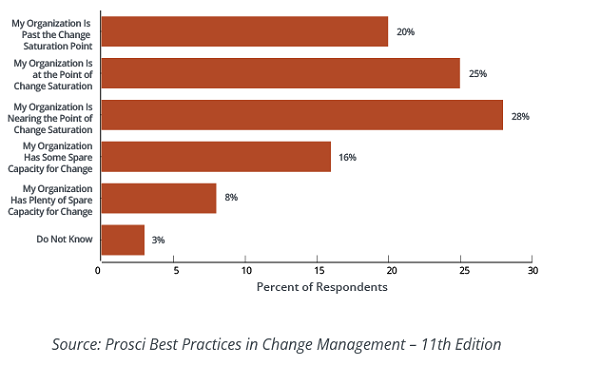
(source: Andrew Horlick, 2023)
Some ways to handle change saturation (before, during and after implementation):
1. Develop and maintain a project inventory (list all significant change projects, planned or being implemented; prioritise them on their degree of importance. One way is to classify your change initiatives as non-discretionary or discretionary
"...nondiscretionary changes are typically a response to changes in your external operating environment, a direct competitive threat, or a mandated requirement from a regulatory agency. Discretionary changes usually emerge from internal initiatives such as developing new products and services, introducing new technology, or initiating continuous improvement approaches..."
Andrew Horlick, 2023)
2. Actively scrutinise all changes you implement (critically analyse the amount of change your organisation can handle; furthermore,
"...it is important to analyse how much every proposed change contributes to achieve your business strategy.."
Andrew Horlick, 2023
Use this to eliminate and/or postpone and/or modify projects that cannot be effectively supported; focus on those change initiatives that give you the best financial returns, stakeholder returns, etc and that the organisation is capable of handling.)
3. Use a structured approach (especially for high-priority or high-risk change initiatives; check that you have adequate resources (including skills, time, funds, etc) to achieve the desired outcome.
4. Senior management must actively support the selected change initiatives (this support is essential and necessary basis for success of change; it involves:
"...- actively and visibly participating throughout the life of the project
- building a coalition of support
- communicating directly with employees..."
Andrew Horlick, 2023
NB Success builds confidence and helps increase organisational capacity to handle change)
5. Achieve, measure and sustain project benefits over time (integrating change management achievements into the operating side of the organisation will increase the chance of sustainability of the benefits; reward and incentivise performance that shows benefit realisation and sustainability)
6. Monitor for signs of change saturation (continually assess individuals impacted by the change to determine their well-being and how they are coping; monitor and evaluate other factors, like customer satisfaction, staff engagement, staff absenteeism, retention rates, etc)