
Resistance to Change
Introduction
Once resistance is established, it can be very hard to mitigate. Therefore, being proactive and preventing or mitigate resistance by building change readiness from the start of the project is critical.
People's reactions to change varies: fear, disengagement, low morale, low trust, etc.
Although these emotional reactions are only human, they can have significant negative impacts on achieving success and will change outcomes.
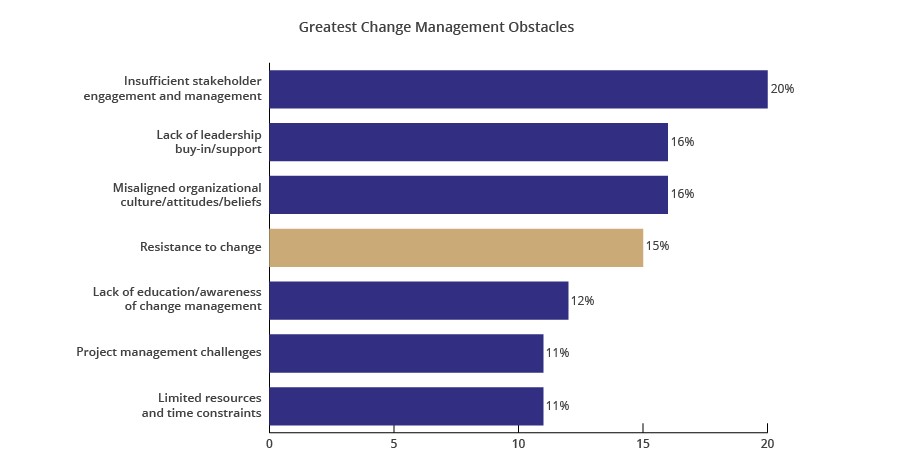
The graph below shows the importance of handling resistance to change; in fact, most of the other factors mentioned, from insufficient stakeholder engagement and management to limited resources and time restraints could all come under resistance to change.
(source: Lisa Kempton, 2024)
Some common factors that influence how people react to organisational change:
- degree of impact (on an individual's work
"...Resistance is a function of disruption. The more disruption people experience as a result of the change, the stronger the resistant response you can expect them to demonstrate..."
Lisa Kempton, 2024)
- personal factors (this includes personal finances, age, health, mobility, family situation, etc; all can influence responses to change)
- amount of change (both at an organisational and personal perspective:
"...Do the people impacted by our change have the capacity to adopt and use it? Or have they reached beyond the capacity for change?..."
Lisa Kempton, 2024
- credibility and trustworthiness (senior management leading the change need to be both credible and trustworthy otherwise change will be contested)
- alignment of the change (both organisational and individual value systems need to be aligned and supportive of the organisational culture and change; otherwise, significant resistance is likely)
- organisational history of handling change (if the organisation has a history of failed changes and has not learnt from these failures, staff are less likely to support any future changes)
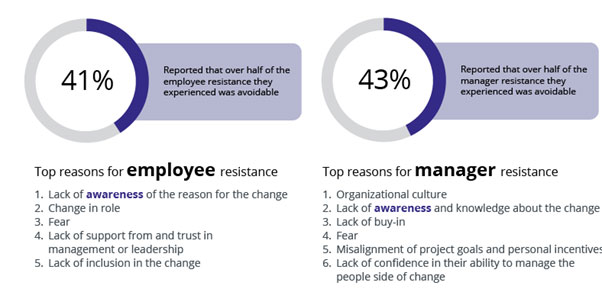
Resistance can be avoided (see diagrams below)
(source: Lisa Kempton, 2024)