
Some Ways to Improve Self-awareness (both personal and professional)
Reflective Practices
- Journaling (write regularly about your thoughts, emotions and daily experiences. Helps identify recurring patterns.)
- Daily Check-ins (pause for 2–3 minutes during the day to ask: “How am I feeling? Why?”)
- End-of-day reflection (record: 1 success, 1 challenge and 1 lesson learned.)
External Feedback
- Seek feedback from trusted people (ask colleagues, friends or mentors how they perceive your strengths and blind spots.)
- 360-degree feedback tools (In professional settings, structured feedback gives multiple perspectives.)
- Active listening (pay attention to how others react to your words and actions.)
Mind-Body Awareness
- Mindfulness (aids awareness notice current thoughts and emotions without judgment.)
- Meditation (focus your attention on one thing and let your thoughts drift)
- Breathing exercises (improves ability to recognize stress responses.)
- Body scanning (notice physical tension and connect it to specific emotions.)
Learning Tools
- Personality or strengths assessments (tools like MBTI or VIA Character Strengths to highlight tendencies.)
(for more detail, see elsewhere the Knowledge Base)
- Emotional intelligence (EQ) frameworks (builds awareness of triggers, moods and regulation strategies.)
- Reading biographies or reflective books (helps compare your thinking with others.)
Behaviour Tracking
- Habit tracking apps/notebooks (monitor behaviours, moods, or reactions in order to spot trends.)
- Trigger mapping (identify situations that cause strong emotional responses.)
- Decision journaling (record reasoning behind decisions and revisit later to learn from outcomes.)
Growth-Oriented Habits
- Practise self-compassion (notice self-talk and reframe harsh internal dialogue.)
- Try new experiences (novel situations reveal hidden strengths or blind spots.)
- Mentorship & coaching (guides can act as mirrors and challenge your assumptions.)
- Pause before reacting (creates space to notice emotional triggers and choose responses.)
- Align actions with values (regularly check whether behaviour reflects personal or professional values.)
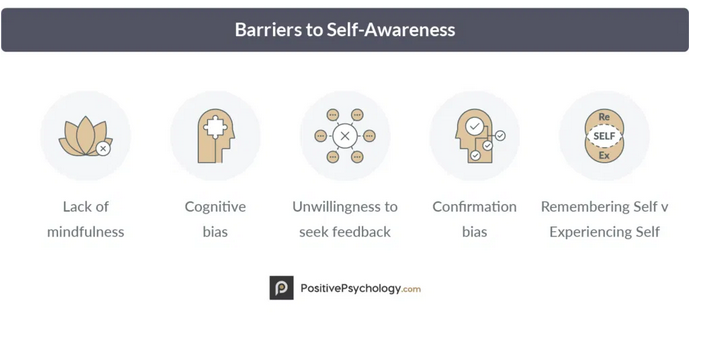
(main source: Courtney Ackerman, 2020)